
Why TIDE?
Guest post by Gr 7 Teacher – Shelby Gale
TIDE (topic statement, important evidence, detailed examination, ending) is an organizational strategy used as part of evidence-based writing instruction. TIDE helps students plan and structure their writing. This simple mnemonic empowers students to self-regulate and tackle nearly any writing task—across genres, curricula, and content areas—with purpose and clarity. Created by Laud in February, 2012, TIDE is now backed by a decade of subsequent research from studies that included it as part of Releasing Writers (Hansford et al., 2025) and more general evidence-based writing practices (Harris et al., 2023; Collins et al., 2021; Benedek-Wood et al., 2014).
Science of Writing: TIDE as a Predictor of Quality
TIDE itself is a powerful predictor of strong writing. A study by Truckenmiller et al. (2025) found that TIDE is one of the strongest predictors of overall writing quality and “therefore should be prioritized for instruction.” This makes TIDE invaluable in the classroom. It is a proven, evidence-based way to build writing independence across grade levels and content areas. TIDE is also versatile. New research has found that teaching only TIDE will raise both informative and opinion writing quality (Kim et al, 2025).
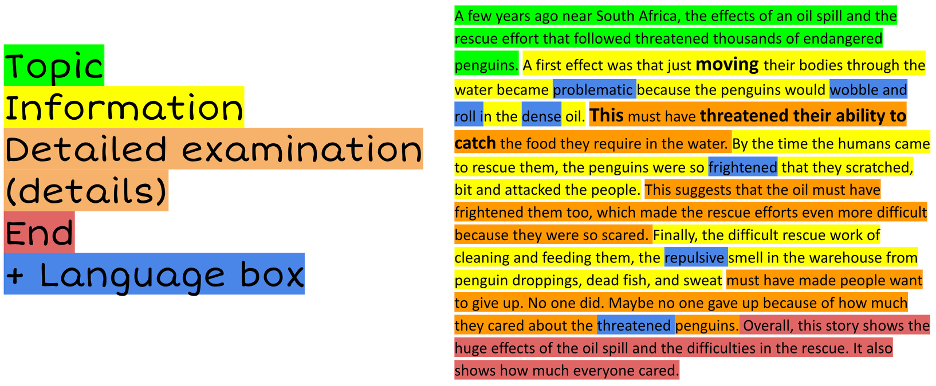
Why TIDE-L? New Research on the L – Language
TIDE-L is a Releasing Writers innovation; drawing on the latest research advances, we add an L for language – for an important purpose. As we support our students in organizing effective writing, a crucial step is empowering them to capture academic language with precision. At Releasing Writers, we incorporate the evolving science of writing and the latest cutting-edge findings from authorities such as Dr. Adrea Truckenmiller and her team. To incorporate her latest advances, we include an ‘L’ for Language to support students in using academic language effectively in their writing.
This new research discovered that ‘the number of words with seven or more letters may be the best indicator of academic language development’ (Sarmiento et al., 2024). Releasing Writers hits this target by incorporating the “L” for language with TIDE-L, which supports students in creating a language box as they organize. This step promotes the consistent incorporation of academic language into their writing, fostering greater cohesion and serving as an important predictor of success. When students make a TIDE-L organizer, they add an ‘L’ to remind themselves to make a Language Box.
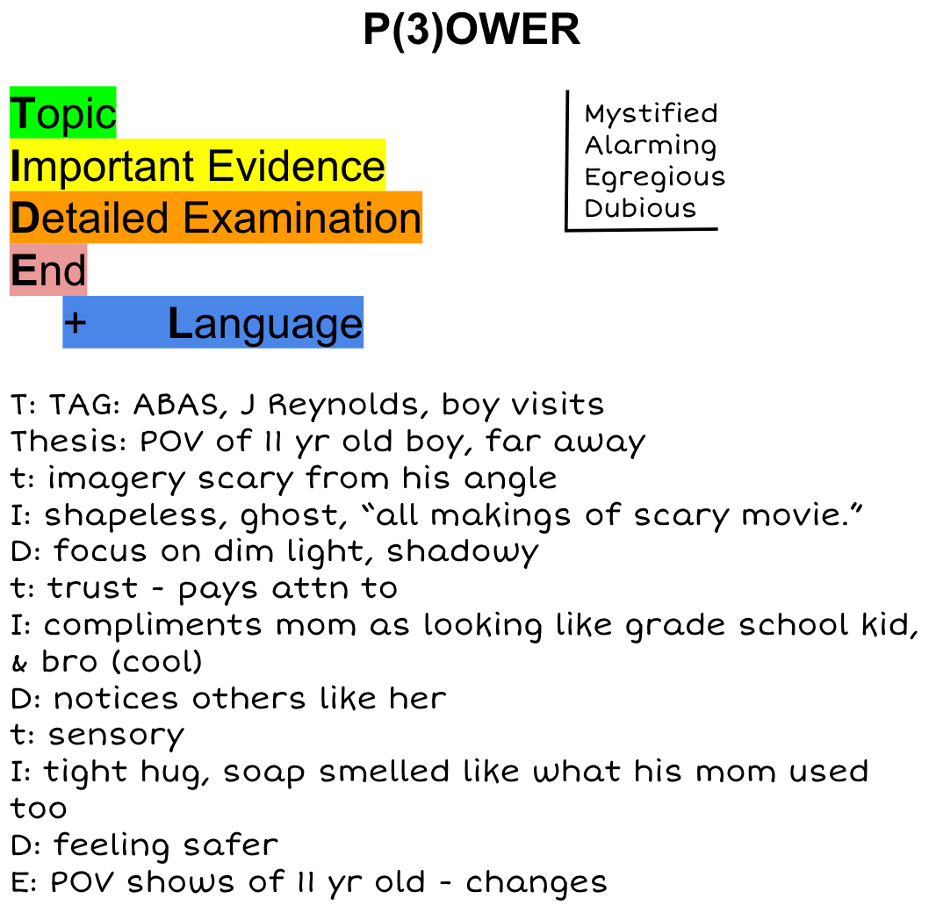
Boost Student Performance: TIDE-L Fosters Self-Regulated Writing
TIDE-L’s simple and accessible structure allows students to quickly internalize the key elements (structure plus language) needed to produce effective writing, enabling them to map out responses to any analytical prompt and write with confidence across genres. As Truckenmiller et al. (2025) note, TIDE “has high utility for most informational writing, including science and social studies content areas, and most subgenres are some variation of TIDE.” Consistent use of TIDE-L allows students to approach writing tasks with a dependable and proven writing strategy.
Increase Learning Outcomes with TIDE-L
Each week, students can write about what they’ve read. TIDE-L works for exit tickets, quick writes, short paragraphs, short essays or full classic essays. It is immensely versatile. Through this varied and regular practice, TIDE-L becomes a roadmap. Its consistent use across classrooms and disciplines boosts student performance even more so.
Writing about reading has proven to increase learning outcomes (Bangert-Drowns, Hurley, & Wilkinson, 2004; Graham & Hebert, 2010), especially when done across classes and domains. Using TIDE-L, students approach whatever reading they do with intent, supporting their ability to read analytically by guiding them to select key evidence throughout.
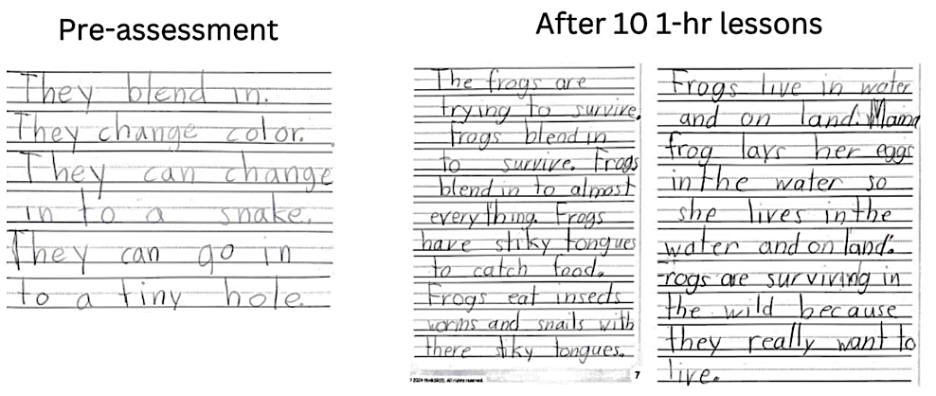
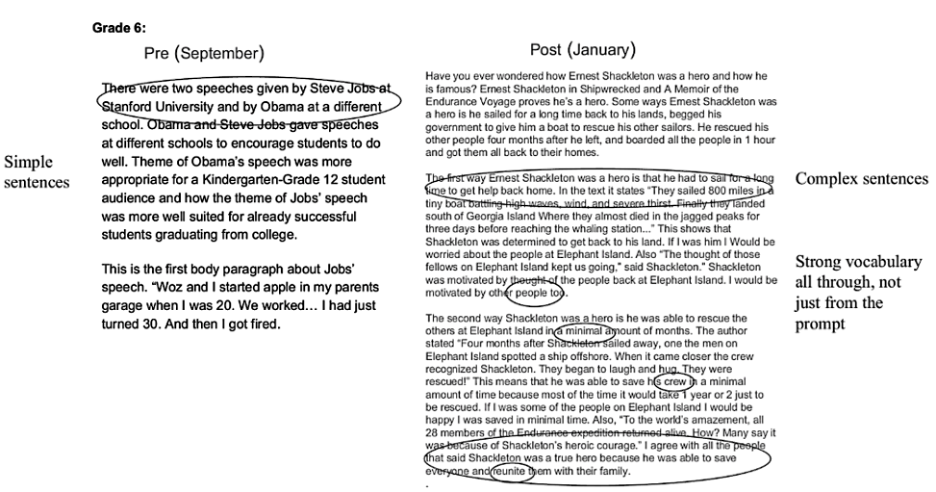
Students using TIDE-L perform better on assessments (Hanford et al., 2024). You can see why in this example. Notice the gains in all levels of writing from vocabulary to clearer structure, both of which TIDE-L support. Releasing Writers also includes modeling and regular formative feedback, but TIDE-L is the heart of the work and an easy first step to take to bring what works to your students. Here you see the growth students show after learning and using TIDE-L.
TIDE-L’s Special Flexibility
TIDE-L is a flexible structure that scales from a quick 1-2 sentence comprehension check all the way up to a full multi-paragraph analytical response. The same framework grows with the task, adding scoops of evidence and elaboration as the depth of thinking required increases.
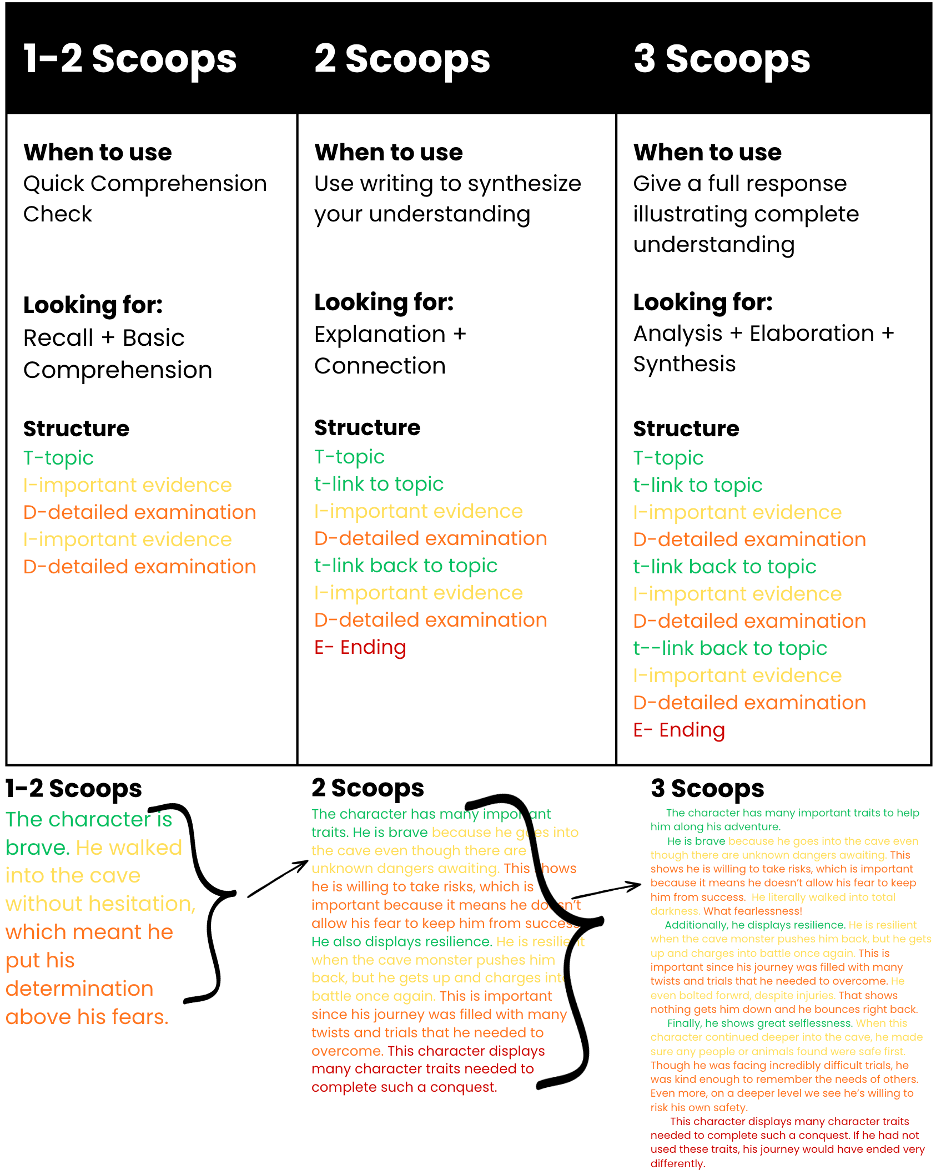
Take the Next Step: Bring TIDE-L’s Evidence-Based Strategies to Your Students
Transform your classroom with Releasing Writers (think SRSD). Start practicing evidence-based strategies by incorporating TIDE-L into your students’ writing routines across all genres and classrooms.
Citations
Bangert-Drowns, R. L., Hurley, M. M., & Wilkinson, B. (2004). The effects of school-based writing-to-learn interventions on academic achievement: A meta-analysis. Review of Educational Research, 74(1), 29–58. (New – why this citation? seminal?) https://doi.org/10.3102/00346543074001029
Hansford, N., Reenstra, E., & Laud, L. (2025). A large-scale implementation and cohort study of thinkSRSD. Discover Education, 4, 585.
Kim, Y. S. G., Harris, K. R., Goldstone, R., Camping, A., & Graham, S. (2025). The Science of Teaching Reading is Incomplete without the Science of Writing: A Randomized Control Trial of Integrated Teaching of Reading and Writing. Scientific Studies of Reading, 29(1), 32–54.
Sarmiento, C. M., Truckenmiller, A. J., Cho, E., & Wang, H. (2024). Academic language use in middle school informational writing. British Journal of Educational Psychology. Advance online publication. https://doi.org/10.1111/bjep.12724
Truckenmiller, A., Valentine, K., Sarmiento, C., Hennenfent, L., Johnson, L., Moura, P., Bachmann, J., Friedman, E., & Bourgeois, S. (2025). Analysis of student informational writing to personalize writing instruction. Intervention in School and Clinic, Advance online publication. https://doi.org/10.1177/10534512251346794